iBeta Level 3 PAD Certification
Complete Industry Guide
July, 2025
Research by Axon Labs
What is iBeta Level 3 Presentation Attack Detection and why is it important for your business?
A new benchmark in spoofing protection: On 16 June 2025, iBeta introduced revolutionary Level 3 Presentation Attack Detection (ISO/IEC 30107-3) testing. Unlike previous PAD Level 1 and Level 2, the new standard uses hyper-realistic masks, variable lighting, and unlimited attack tools to simulate experienced attackers
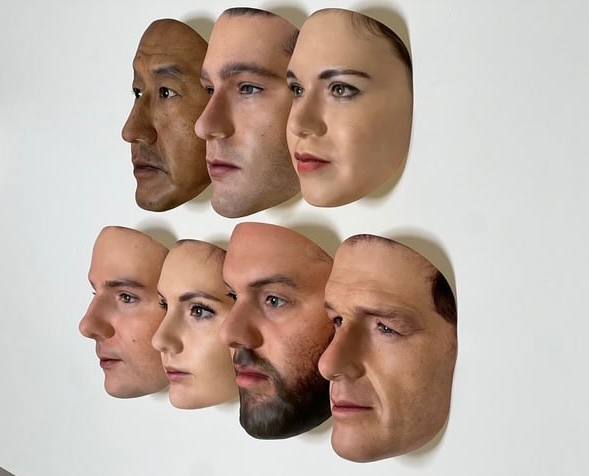
We believe that the attacks will look like this
iBeta Level 3 vs Level 1 and Level 2: Key Differences
Technical specifications of iBeta Level 3 testing:
- Hyper-realistic 3D masks for liveness detection testing
- Advanced spoofing algorithms using AI
- Variable lighting conditions for testing anti-spoofing systems
- Unlimited arsenal of attack tools for maximum authenticity
|
Level
|
Typical attacker sophistication
|
PAI cost limit
|
Time limit
|
Test volume
|
APCER limit
|
BPCER limit
|
|---|---|---|---|---|---|---|
|
1
|
Simple attacks: printed photo, image on a screen
|
≤ 30 USD
|
8 h per PAI
|
6 types × 150 attacks + 50 bona-fide (≈ 900 attempts)
|
0%
|
≤ 15%
|
|
2
|
Medium complexity: dynamic video, 3D prints, latex/silicone masks
|
≤ 300 USD
|
≤ 24 h per PAI; total 2–4 days per type
|
5 types × 150 = 750 attacks + 250 bona-fide
|
≤ 1%
|
≤ 15%
|
|
3
|
Targeted high-end attacks: custom hyper-realistic masks, controlled scene (lighting, background, motion)
|
No fixed limit; budget agreed per system
|
Time and conditions set individually
|
Parameters defined ad hoc; PASS/FAIL evaluation
|
≈ 0% (strict PASS/FAIL)
|
≤ 10%
|
Industry Leaders Who Passed iBeta Level 3
In early 2026, Incode Technologies became the first company in the biometric industry to pass iBeta Level 3 PAD certification on both iOS and Android platforms with a 0% error rate, demonstrating that production-grade face recognition systems can defeat ultra-realistic 3D mask attacks. The achievement was announced by both Incode and iBeta Quality Assurance and widely covered by industry media
Shortly after, Veridas – a Spanish biometric identity verification provider, achieved similar iBeta Level 3 certification, marking the beginning of a new wave of L3-compliant biometric authentication systems entering production deployment in regulated banking, fintech, and government identity verification
These industry milestones validate the rigor of the new iBeta Level 3 PAD testing methodology under the ISO/IEC 30107-3 standard and signal that compliance with the standard is rapidly becoming a competitive differentiator for face recognition, eKYC, and digital onboarding solutions. Companies preparing for iBeta Level 3 testing typically need specialized training data covering high-fidelity 3D
mask attacks, including silicone, rubber, and 3D resin masks, that were not previously required at Level 2
Why iBeta Level 3 PAD is critical for biometric systems?
Compliance with international standards ISO/IEC 30107-3
iBeta Level 3 certification ensures:
- Compliance with regulatory requirements in the field of biometric security
- Trust of partners and customers in your liveness detection systems
- Protection against sophisticated presentation attacks using deepfake technologies
Practical advantages of implementing iBeta Level 3:
- Increased resistance to spoofing attacks
- Compliance with FIDO Alliance requirements for biometric authentication
- Preparedness for future threats in the field of face recognition security
Train for the newest iBeta Level 3 today
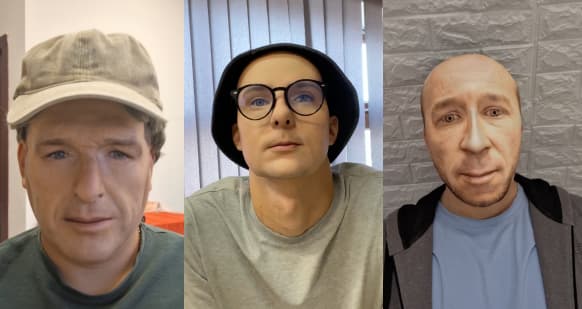
We have created the first dataset for the newest certification level: “iBeta 3 Level Dataset.” It is a highly exclusive, actively expanding collection of advanced 3D rubber-mask attacks aligned with iBeta Level 3
Conclusion: iBeta Level 3 as the new industry standard
iBeta Level 3 PAD bridges the gap between theoretical security and real-world threats. Compliance with this standard demonstrates to regulators, partners, and users that your biometric protection can withstand sophisticated, well-funded spoofing attacks
Frequently asked questions
iBeta Level 3 is the strictest tier of presentation attack detection (PAD) certification administered by iBeta Quality Assurance, an independent NIST-NVLAP-accredited testing laboratory. Announced by iBeta in early 2026, Level 3 evaluates whether face recognition and liveness detection systems can defeat the most sophisticated 3D mask attacks: including rubber and high-fidelity 3D resin masks custom-manufactured to replicate specific individuals. Compliance with iBeta Level 3 is performed under the ISO/IEC 30107-3 international standard and signals production-grade defense against ultra-realistic spoofing attacks for biometric authentication systems in regulated industries
iBeta Level 2 evaluates biometric systems against silicone, latex, wrapped 3D paper, and advanced paper mask attacks, already a significant step up from 2D paper and replay attacks tested at Level 1. iBeta Level 3 goes further by introducing high-fidelity rubber and 3D resin masks that are custom-manufactured to replicate specific individuals' facial geometry with high precision. These advanced masks defeat anti-spoofing techniques that previously worked against silicone or latex, particularly those relying on texture analysis, depth cues, or basic motion-based liveness detection. Level 3 also requires stricter APCER and BPCER thresholds than Level 2
In early 2026, Incode Technologies became the first company in the biometric industry to pass iBeta Level 3 PAD certification on both iOS and Android platforms with a 0% error rate. Shortly after, Veridas - a Spanish biometric identity verification provider, also achieved iBeta Level 3 certification. As of 2026, these two companies represent the leading edge of L3-compliant face recognition and liveness detection systems entering production. Industry analysts expect more biometric companies to pursue L3 certification in regulated banking, fintech, and government identity verification verticals
iBeta Level 3 testing targets the most advanced 3D mask presentation attacks, including high-fidelity rubber masks, 3D resin masks custom-manufactured per individual, and combinations of these with active liveness countermeasures (head movements, blinking via eyeholes). The testing methodology, defined under ISO/IEC 30107-3, also includes the attack types from Levels 1 and 2 as baseline coverage, so passing L3 effectively means passing all three levels
iBeta certification timelines vary by system complexity and the number of platforms being tested (iOS, Android, web, etc.), but Level 3 testing is typically more time-intensive than Levels 1 and 2 due to the higher number of attack vectors, larger sample sizes, and stricter reporting requirements. Companies typically need 4–8 weeks for formal L3 testing once their face anti-spoofing system is ready, plus an extended preparation phase of several months for training and internal validation against advanced 3D mask datasets
iBeta Level 3 testing follows the metrics defined in ISO/IEC 30107-3:
- APCER (Attack Presentation Classification Error Rate) - measures how often a PAD subsystem incorrectly classifies an attack as bona fide
- BPCER (Bona fide Presentation Classification Error Rate) - measures how often genuine faces are incorrectly classified as attacks
- IAPMR (Impostor Attack Presentation Match Rate) - measures full-system performance combining PAD with the biometric matching subsystem
Level 3 requires stricter thresholds than Level 2 across all metrics. Specific thresholds are confirmed by iBeta during test scoping and depend on the type of PAD evaluation (subsystem, data capture, or full-system)
Yes. Preparing a face recognition or liveness detection system for iBeta Level 3 requires training data that covers the high-fidelity 3D mask attack vectors specifically tested at Level 3 - primarily rubber, and 3D resin masks. Public academic datasets (Idiap CSMAD, Idiap 3DMAD, MSU-MFSD) cover earlier attack categories but lack the high-fidelity mask realism required for L3. Commercial datasets such as the Axon Labs iBeta Level 3 Dataset provide 12+ custom-manufactured rubber and resin masks specifically designed for L3 preparation
In practice, no, iBeta Level 3 testing includes Level 1 and Level 2 attack categories as part of the baseline evaluation, so a biometric system that fails on basic 2D paper attacks or standard silicone masks cannot pass L3. Most companies pursuing L3 have typically already passed L1 and/or L2 first, then trained additional defenses against high-fidelity 3D rubber and resin masks before attempting L3. Companies like Incode and Veridas built their L3 readiness on top of existing L1/L2-certified face anti-spoofing systems