
iBeta Level 3 Dataset – High-Fidelity Mask Attacks

iBeta 3 High-Fidelity Rubber Mask Dataset

There are 1,000+ videos from 7 High-Fidelity mask attacks tailored 

for iBeta level 3 certification

Check samples on Kaggle

Dataset Summary

Parameter
Value
Volume
1,000+ videos with 7 high-fidelity rubber masks
Coverage
High-fidelity rubber mask attacks for iBeta Level 3 PAD certification
Demographics
7 mask identities across mixed gender and adult age range
Devices
iOS and Android phones
Conditions
Indoor capture across two locations and 80+ backgrounds, with natural, artificial, directional, and low-light conditions

Introduction

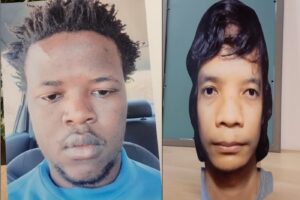
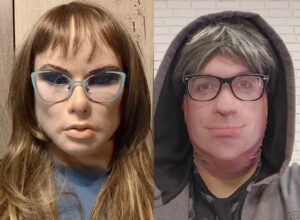
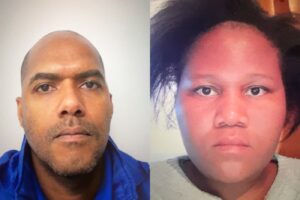
The iBeta 3 High-Fidelity Rubber Mask Dataset is an exclusive, actively expanding collection of advanced 3D rubber mask attacks built for iBeta Level 3 certification – the highest tier of biometric presentation attack detection testing. It contains 1,000+ videos across 7 premium high-fidelity rubber masks with active liveness sequences (head movements, blinking, zoom-in/zoom-out), designed for training, benchmarking, and pre-certification testing. iBeta Level 3 tests biometric systems against ISO/IEC 30107-3 – the international standard for biometric presentation attack detection at the highest assurance level, where APCER, BPCER, and ACER thresholds are tighter than at Levels 1 and 2

Dataset Features

  • Professional mask construction: All 7 masks manufactured to L3 certification realism standards
  • Per-mask attribute variation: Different hairstyles, glasses, and accessories, 40-50 combinations per mask
  • Active liveness sequences: Head movements, blinking, zoom-in and zoom-out per video
  • Selfie camera focus: All videos captured with front-facing cameras matching real KYC flows

Why this dataset?

  • Built for iBeta-3 difficulty. Active zoom-in/zoom-out prompts and high-fidelity PAD scenarios aligned to the newest certification level
  • First to market & growing. Our first iBeta-3 dataset, actively expanding—train today and stay ahead as standards evolve
  • State-of-the-art premium mask. An advanced rubber mask; we’re the first to release datasets of this kind and provide free samples

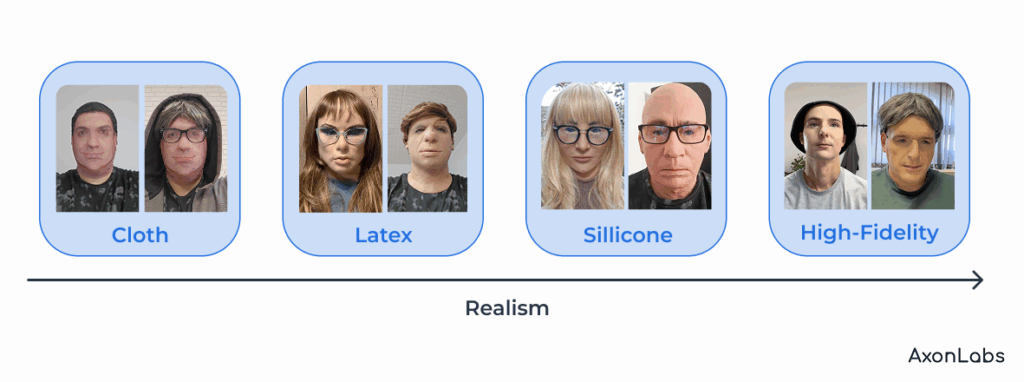
See the difference

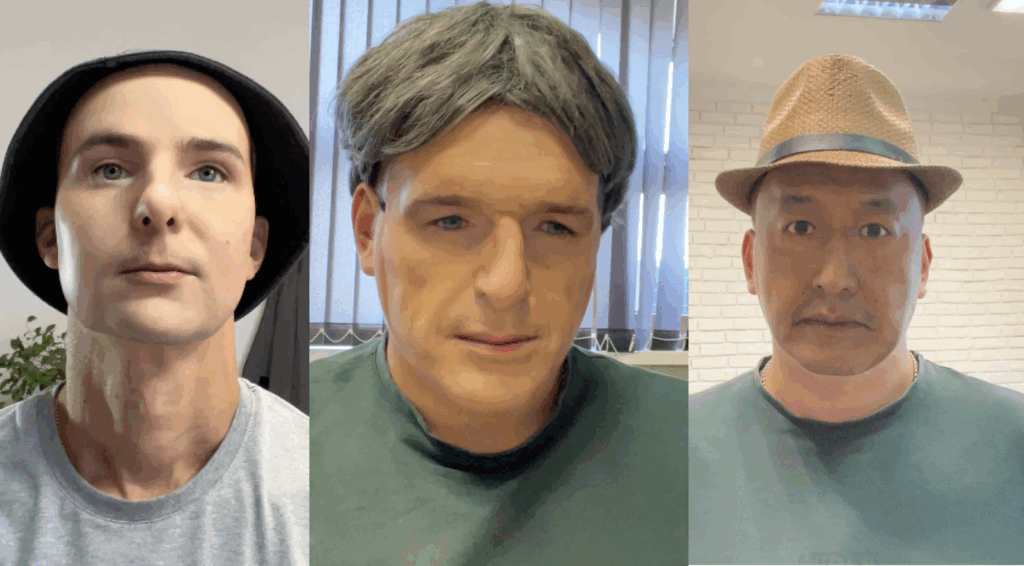
We also have cloth/latex/silicone mask sets, but this one is far more detailed and realistic – built specifically to stress-test PAD at iBeta 3 difficulty

Source and collection methodology

We captured high-fidelity rubber mask attacks with front-facing cameras across 7 premium 3D masks under varied environments and lighting conditions. Each clip follows an active liveness script (head movements, blinking, zoom-in/zoom-out). Data collection complies with GDPR Article 9 for the processing of biometric data

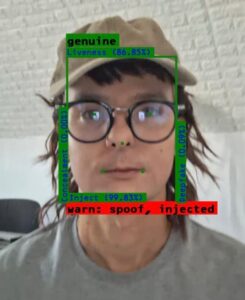
Real-World Validation: Open Liveness Model Stress Test

To demonstrate the practical value of this dataset, we tested its samples against Doubango’s open-source face liveness model – a publicly available liveness detection SDK used as a reference implementation by anti-spoofing researchers and developers

Key result: Doubango’s liveness classifier rated the high-fidelity mask attack below as 86.85% genuine – failing to detect the spoof at the liveness layer. The attack was only flagged by Doubango’s secondary injection-detection module, not by liveness scoring itself

Use cases and applications

iBeta Level 3 Certification Compliance: 

  • Helps to train the models for iBeta level 3 certification tests
  • Allows pre-certification testing to assess system performance before submission

Inhouse Liveness Detection Models: 

  • Used for training and validation of anti-spoofing models
  • Enables testing of existing algorithms and identification of their vulnerabilities against spoofing attacks

How companies achieved iBeta with us

Datasets like this contributed to 21% of companies that passed iBeta certification in 2025 – all Axon Labs clients

Learn the iBeta 3 context

iBeta Level 3 introduces stricter requirements: mandatory active liveness (zoom in/out), realistic high-fidelity mask attacks, and tighter APCER/BPCER/ACER limits. For implementation details and a practical checklist, see our: iBeta Level 3 guide

File format and accessibility

  • Format: Videos are optimized for compatibility with mainstream ML frameworks
  • Resolution and frame rate: Videos are high-resolution with frame rates calibrated for capturing quick and realistic mask placements, ensuring precise data for model training

Potential customisation options:

  • Filming videos attacks with targeted movements 
  • Filming videos attacks for you on target devices (for example, webcams)
  • Using your SDK for custom attack scenarios spoofing your ML model
  • Use RGB and USB cameras to support diverse research and testing needs
  • For two masks, video recordings are available from the back camera, capturing multiple angles (close-up, far, left, and right)

Legal & Compliance

We prioritize data privacy, ethical AI development, and regulatory compliance. Our Replay Attack Dataset is collected and processed in full accordance with global data protection standards including GDPR, ensuring legality, security, and responsible AI practices

Sample dataset

A sample version of this dataset is available on Kaggle. Leave a request for additional samples in the form below

Have a question?

High-fidelity rubber mask attacks are 3D presentation attacks using professionally manufactured rubber face masks designed to replicate specific target identities with photorealistic detail. Unlike paper-based or cloth mask attacks, rubber masks produce realistic skin texture, depth, and three-dimensional face geometry that challenges even advanced liveness detection models. These attacks are the primary class tested in iBeta Level 3 PAD certification - the highest tier of biometric presentation attack detection testing

The dataset contains 1,000+ videos across 7 high-fidelity rubber masks, each custom-manufactured to replicate a specific target identity. Every mask is recorded with multiple attribute combinations: different hairstyles, glasses, and accessories, to maximize within-mask visual diversity. Videos are captured with front-facing (selfie) cameras on iOS and Android devices, include active liveness sequences (head movements, blinking, zoom-in/out), and span indoor office backgrounds under varied lighting

The dataset targets iBeta Level 3 PAD certification - the highest tier of biometric presentation attack detection testing. iBeta Level 3 tests biometric systems against ISO/IEC 30107-3 at the highest assurance level, where APCER, BPCER, and ACER thresholds are tighter than at Levels 1 and 2. This tier is required for deployments where commercial-grade 3D masks must be reliably detected

This dataset focuses specifically on rubber mask attacks, one of two mask families tested at iBeta Level 3. For custom 3D-printed resin masks, see the 3D Resin Mask Dataset. For combined rubber and resin coverage in a single training set, see the main iBeta Level 3 Dataset. Rubber and resin masks produce fundamentally different visual artifacts, so training on both is recommended for production models targeting L3 certification

Rubber mask attacks were captured using front-facing (selfie) cameras on iOS and Android device models. Each of the 7 masks is recorded across multiple attribute combinations: different hairstyles, glasses, and accessories, to maximize within-mask visual diversity. Every video follows an active liveness protocol with head movements, blinking, and zoom-in/out phases, captured across varied indoor office backgrounds under natural and artificial lighting conditions

The dataset is built for the most demanding iBeta PAD tier through two quality dimensions. First, professional mask construction: each of the 7 rubber masks is manufactured to iBeta Level 3 certification realism standards, replicating specific target identities with photorealistic skin texture and three-dimensional face geometry. Second, deep per-mask coverage: each mask is recorded across multiple attribute combinations and capture conditions, producing ~140 videos per mask for robust within-mask training. Axon Labs datasets have contributed to 21% of companies passing iBeta certification in 2025

Yes. All data is collected with explicit written informed consent from every participant in compliance with GDPR Article 9, which specifically governs the processing of biometric data. The dataset is licensed for commercial use in AI model training, validation, and iBeta certification preparation. Comprehensive compliance documentation, including consent provenance, collection methodology, and legal basis review, is available upon request

Yes. A sample version of this dataset is available on request, you can verify mask construction quality, active liveness sequences, per-mask attribute variation, and format compatibility with your training pipeline before committing to the full dataset. Submit a request through the form on this page for sample access, typically delivered within 1–2 business days

Contact us

Tell us about yourself, and get access to free samples of the dataset 

Didn't find what you were looking for?

Our collection includes many datasets for various requests

© 2022 – 2026 Copyright protected