
iBeta Certification Trends 2025
Complete Industry Analysis
February, 2026
Research by Axon Labs
What is iBeta Certification?
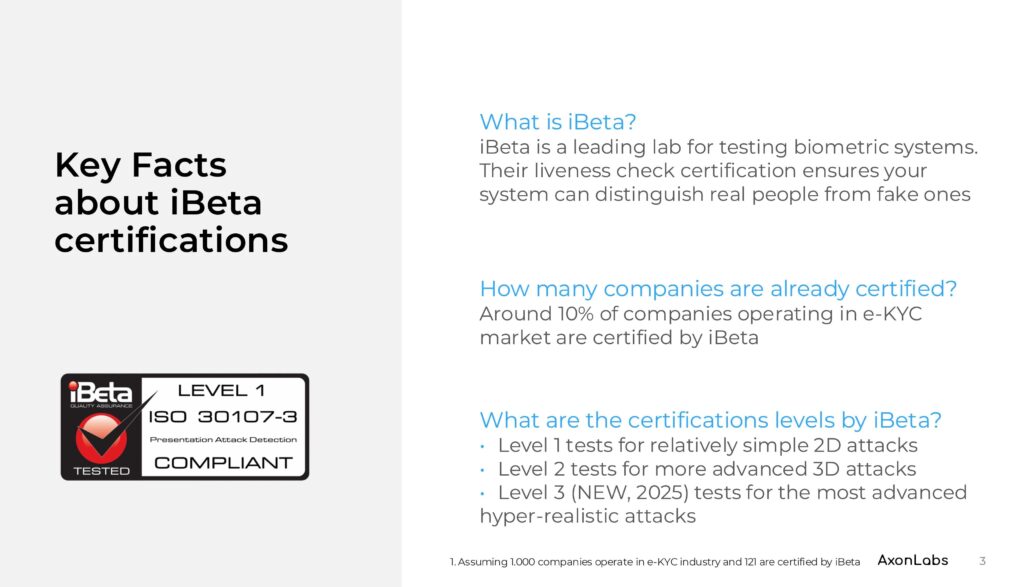
iBeta is the leading independent laboratory for testing biometric systems and liveness detection solutions. An iBeta liveness certification validates that a biometric system can reliably distinguish real human users from presentation attacks (spoofing attempts using photos, videos, masks, or other artifacts)
Why iBeta Certification Matters
- Industry Standard: iBeta certification has become the benchmark for liveness detection quality in the e-KYC and identity verification industry
- Market Requirement: Only approximately 10% of companies operating in the e-KYC market hold iBeta certification, making it a significant competitive differentiator
- Regulatory Compliance: Many financial institutions and regulated industries require iBeta-certified liveness detection for customer onboarding
iBeta Levels Certification and NEW iBeta Level 3
|
Level
|
Typical attacker sophistication
|
PAI cost limit
|
Time limit
|
Test volume
|
APCER limit
|
BPCER limit
|
|---|---|---|---|---|---|---|
|
1
|
Simple attacks: printed photo, image on a screen
|
≤ 30 USD
|
8 h per PAI
|
6 types × 150 attacks + 50 bona-fide (≈ 900 attempts)
|
0%
|
≤ 15%
|
|
2
|
Medium complexity: dynamic video, 3D prints, latex/silicone masks
|
≤ 300 USD
|
≤ 24 h per PAI; total 2–4 days per type
|
5 types × 150 = 750 attacks + 250 bona-fide
|
≤ 1%
|
≤ 15%
|
|
3
|
Targeted high-end attacks: custom hyper-realistic masks, controlled scene (lighting, background, motion)
|
No fixed limit; budget agreed per system
|
Time and conditions set individually
|
Parameters defined ad hoc; PASS/FAIL evaluation
|
≈ 0% (strict PASS/FAIL)
|
≤ 10%
|
iBeta Certification Statistics 2025
The iBeta certification program continued its strong growth trajectory in 2025:
- 58 certifications issued in 2025 (~20% growth year-over-year)
- 121 companies have achieved 233 total certifications over 8 years
- 21 new companies received their first iBeta certification in 2025
- 40 companies got certified in 2025, with 50% achieving Level 2
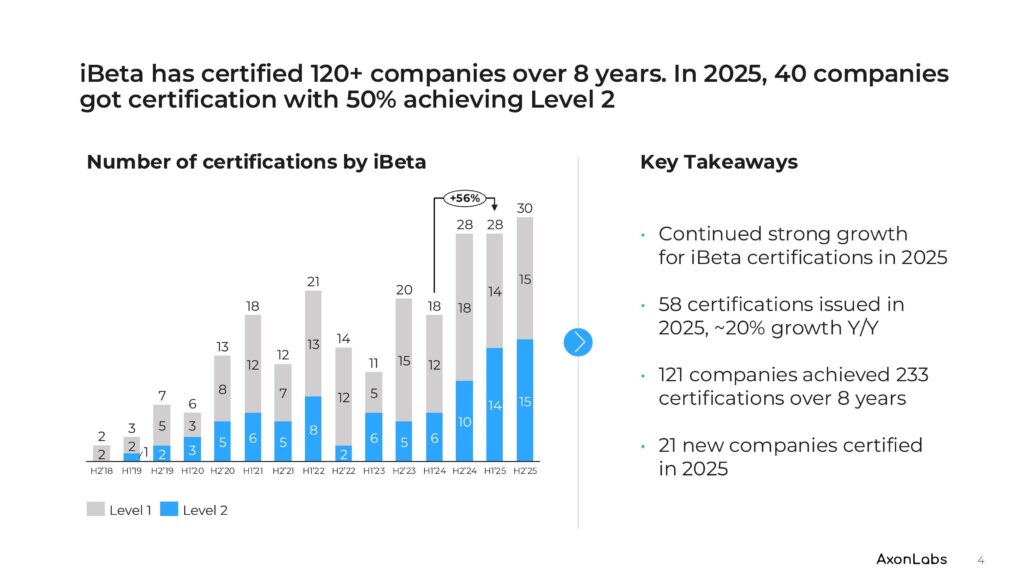
Regional Distribution of iBeta Certifications
- Asia Pacific leads with nearly half (48%) of all certifications in 2025
- North America showed strongest growth: from 5 to 11 companies (+120% increase)
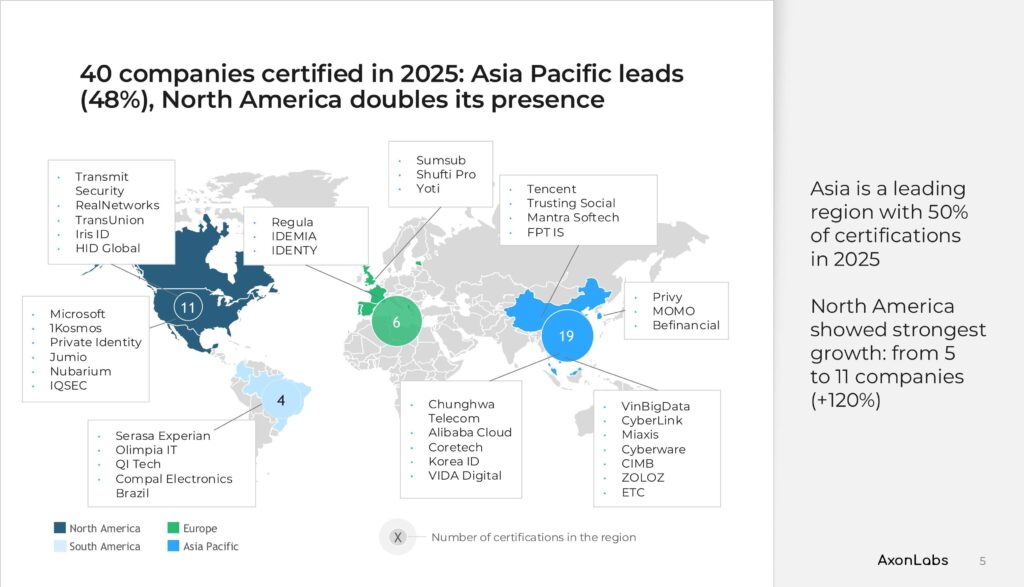
iBeta Level 1 vs Level 2 Certification Trends
The balance between iBeta Level 1 and Level 2 certifications shifted significantly in 2025:
|
Year
|
Level 1
|
Level 2
|
|---|---|---|
|
2024
|
65%
|
35%
|
|
2025
|
50%
|
50%
|
Read more about iBeta certification and types of attacks in our article:
Active vs Passive Liveness Detection
Passive liveness detection continues to dominate the market as it offers:
- Better user experience (no user actions required)
- Faster verification times
- Higher completion rates
New Trend: PC-Based Biometric Solutions
A significant development in 2025 was the emergence of PC-based biometric solutions, now accounting for 20% of tested platforms. This reflects:
- Growing demand for desktop identity verification
- Enterprise workforce authentication needs
- Remote work security requirements
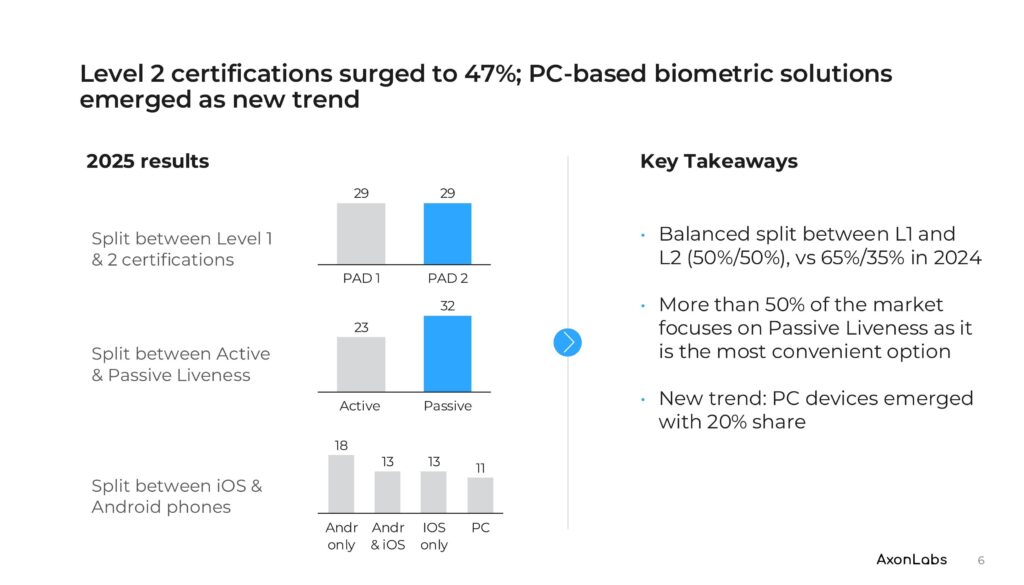
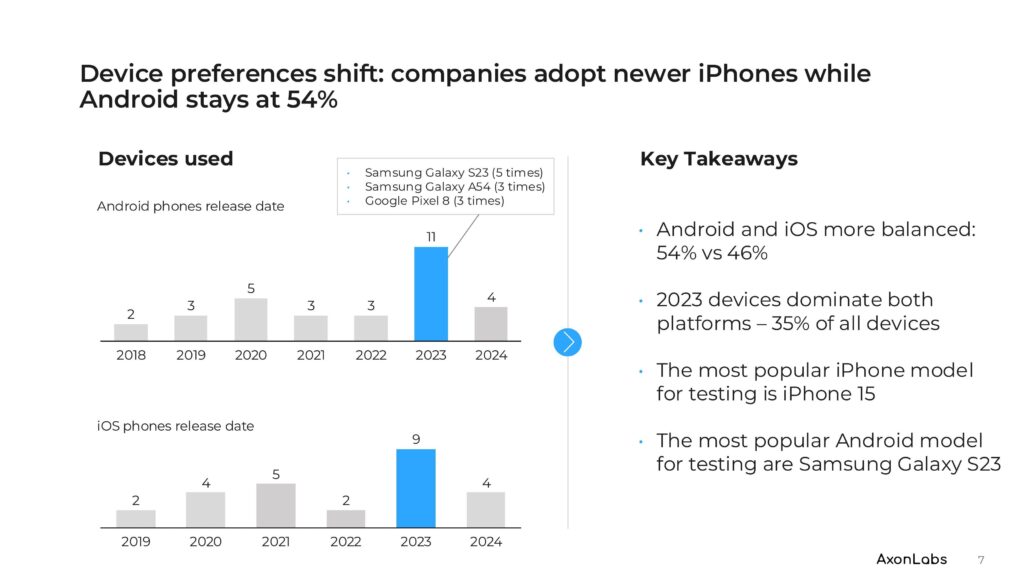
Device Preferences for iBeta Testing
Industry Breakdown
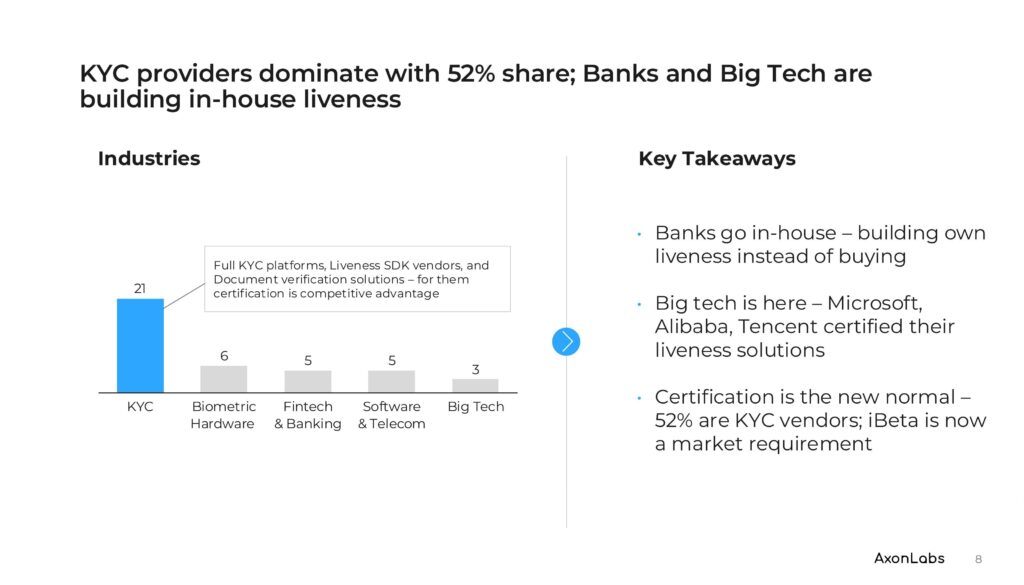
Key Industry Trends
- Banks building in-house liveness: Major financial institutions are developing proprietary liveness detection rather than purchasing third-party solutions
- Big Tech enters the market: Microsoft, Alibaba, and Tencent have certified their own liveness detection solutions, signaling increased competition
- Certification as market requirement: For KYC vendors, iBeta certification has transitioned from competitive advantage to market necessity
Key Takeaways
- Continued growth: 58 certifications in 2025 represents ~20% year-over-year growth
- Level 2 surge: The split between Level 1 and Level 2 reached parity (50/50), up from 65/35 in 2024
- Level 3 introduction: New certification tier for hyper-realistic attacks including deepfakes
- Asia Pacific dominance: The region accounts for 48% of all certifications
- North America acceleration: +120% growth in certified companies
- PC platforms emerge: 20% of certifications now include PC-based testing
- Passive liveness preference: Over 50% of the market focuses on passive liveness detection
- Big Tech participation: Major technology companies are now seeking certification
About This Research
This analysis is based on research conducted by Axon Labs, a company specializing in data collection and licensing for liveness detection and face recognition development
Success iBeta stories of our clients