Dataset Summary
|
Parameter
|
Value
|
|---|---|
|
Volume
|
4,500+ videos with 40 unique wrapped 3D masks
|
|
Coverage
|
Wrapped 3D paper mask attacks for iBeta Level 2 PAD certification
|
|
Demographics
|
Balanced gender, multi-ethnic
|
|
Devices
|
iOS and Android phones
|
|
Conditions
|
3–4 capture locations with natural and three-tier artificial lighting (low, medium, bright)
|
Introduction
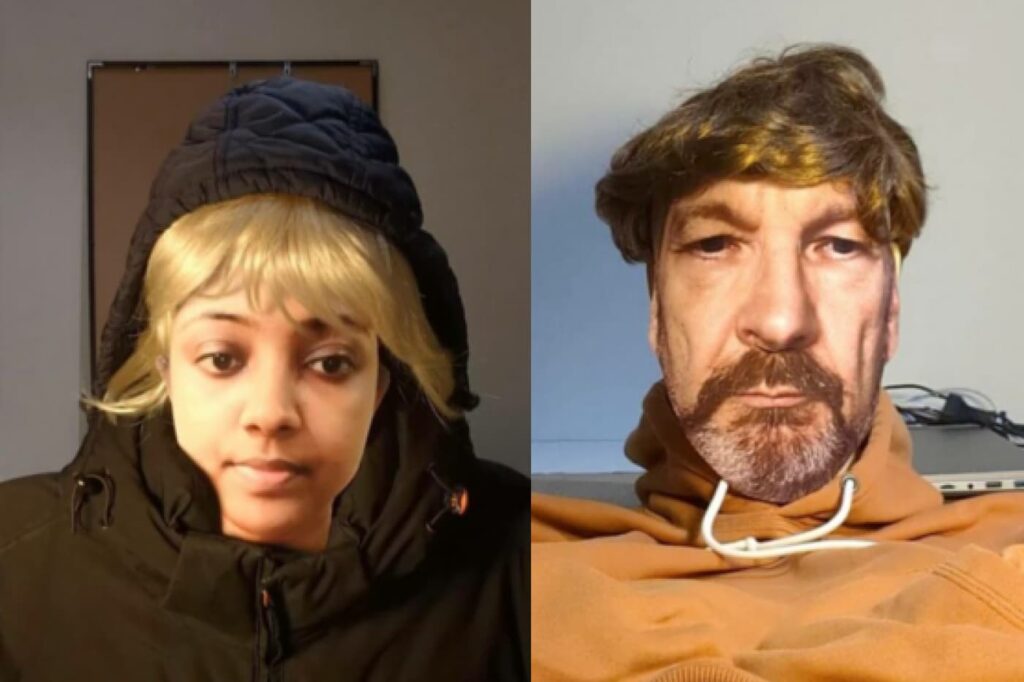
This dataset is designed to enhance Liveness Detection models by simulating Wrapped 3D Attacks — a more advanced version of 3D Print Attacks, where facial prints include 3D elements and additional attributes. It is particularly useful for iBeta Level 2 certification and anti-spoofing model training
3D Wrapped dataset summary
- Dataset Size: ~4k videos shoot on 40 IDs demonstrating various spoofing attacks
- Active Liveness Features: Includes zoom-in and zoom-out to enhance training scenarios
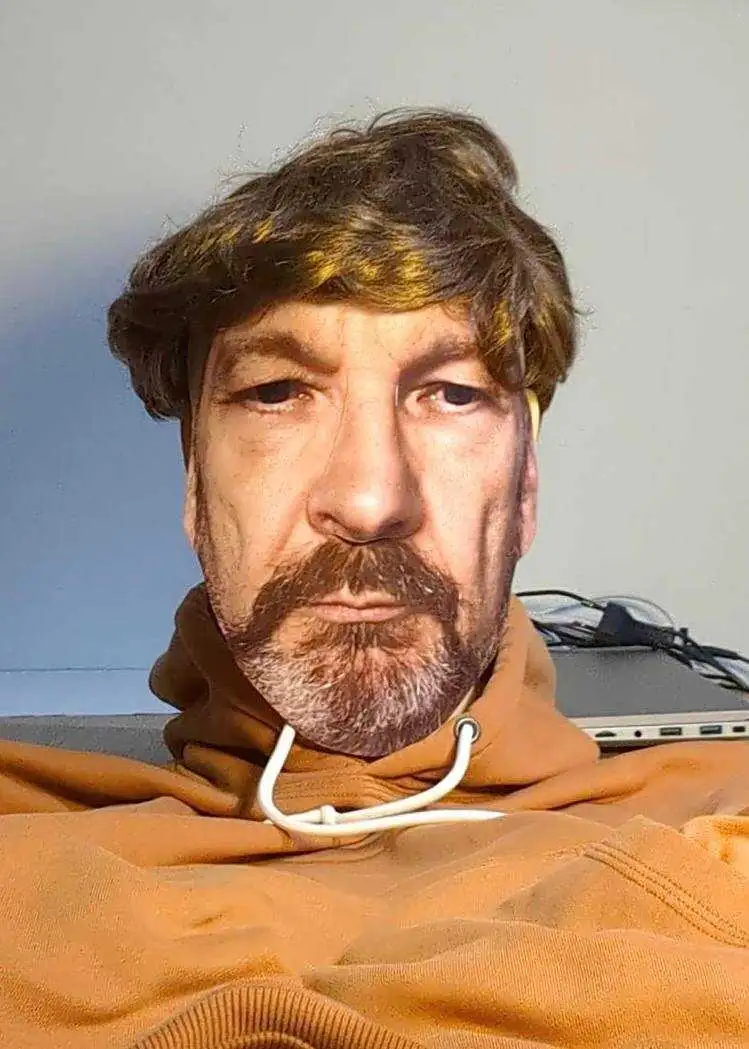
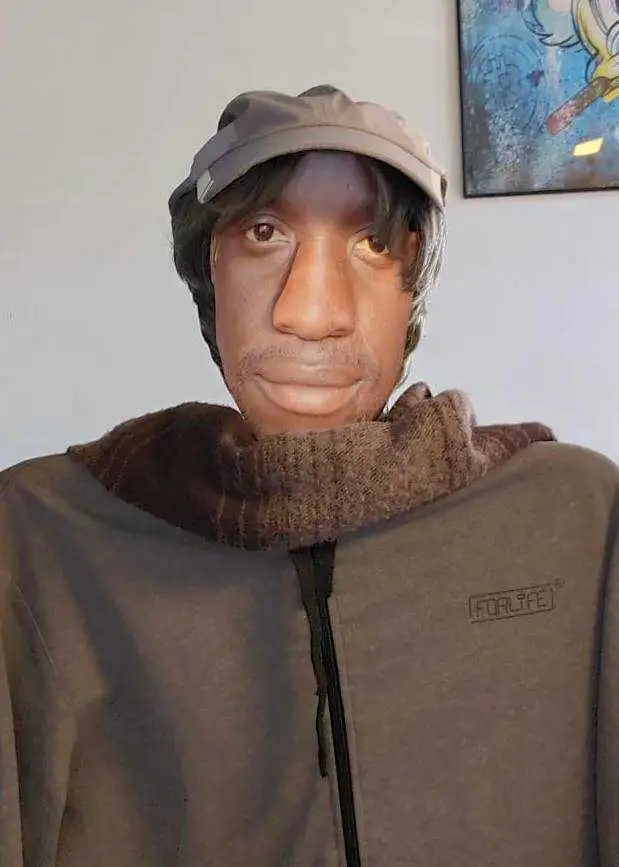
- Attributes: Different hairstyles, glasses, wigs and beards to enhance diversity
- Variability: 4 indoor locations with different types of lighting: low, medium and bright
- Main Applications: Preparation for iBeta Level 2 certification, Active and passive liveness for anti spoofing systems


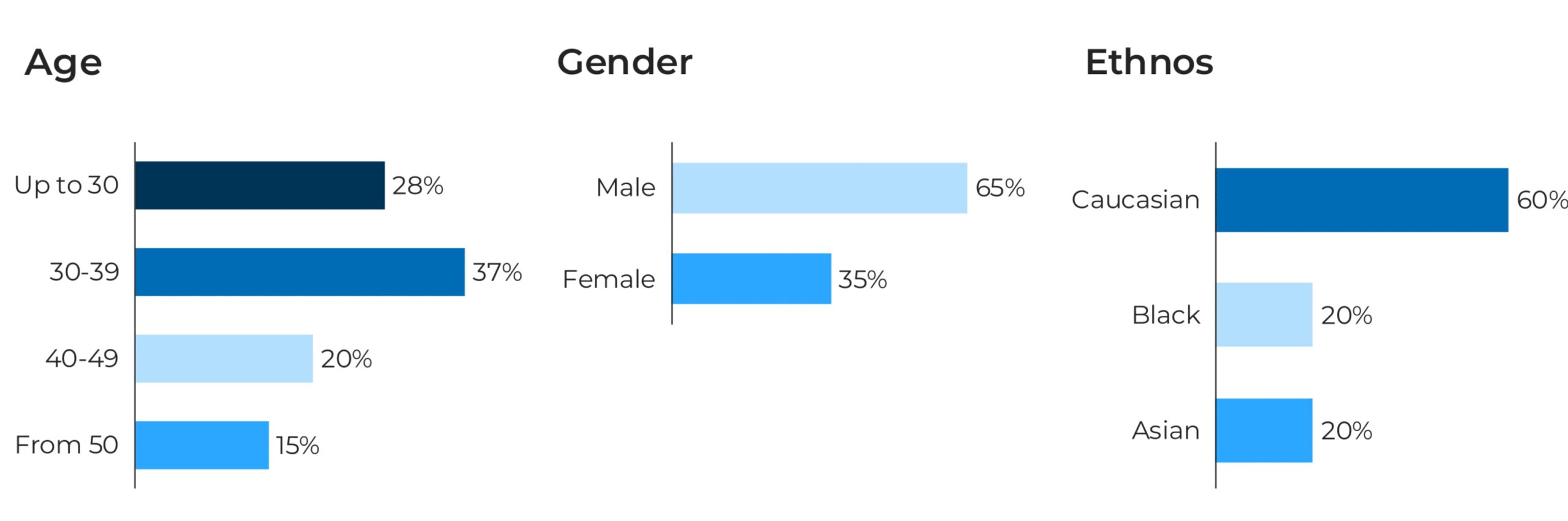
Structure of the Dataset, % (N = 40 IDs)
Source and collection methodology
The videos capture realistic spoofing conditions using different recording devices and variety of environments. Additionally, each attack video employs a zoom-in effect, adding to its effectiveness in active liveness detection. The videos were shot using a back-facing camera
To create wrapped 3D attacks, we:
Constructed 3D facial structures by cutting out A4-sized face prints, shaping volume for the nose, forehead, and chin, and mounting them on mannequin heads or cylindrical objects
Added attributes, including wigs, beards, mustaches, glasses, hats, and hoods, to increase spoofing complexity
Simulated a human torso using clothing on mannequins, chairs, or surfaces
Use cases and applications
iBeta Level 2 Certification Compliance:
- Helps to train the models for iBeta level 2 certification tests
- Allows pre-certification testing to assess system performance before submission
Inhouse Liveness Detection Models:
- Used for training and validation of anti-spoofing models
- Enables testing of existing algorithms and identification of their vulnerabilities against spoofing attacks
Who is this for?
- AI/ML teams – Train custom anti-spoofing models for security applications
- Identity verification providers – Ensure fraud prevention in KYC & financial services
- Financial institutions – Implement internal e-KYC solutions
File format and accessibility
- Format: Videos are optimized for compatibility with mainstream ML frameworks
- Resolution and frame rate: Videos are high-resolution with frame rates calibrated for capturing quick and realistic mask placements, ensuring precise data for model training
Potential customisation options:
- Filming videos attacks with targeted movements (E.g. – Zoom In / Zoom Out)
- Filming videos attacks for you on target devices (for example, webcams)
- Using your SDK for custom attack scenarios spoofing your ML model
- Use RGB and USB cameras to support diverse research and testing needs
Other Datasets for iBeta 2:
Legal & Compliance
We prioritize data privacy, ethical AI development, and regulatory compliance. Our Silicone Mask Attack Dataset is collected and processed in full accordance with global data protection standards including GDPR, ensuring legality, security, and responsible AI practices
Sample dataset
A sample version of this dataset is available on Kaggle. Leave a request for additional samples in the form below
Have a question?
Wrapped 3D attacks are hybrid presentation attacks that combine facial prints with three-dimensional face elements, creating spoofs with both print texture patterns and realistic depth cues. They are more sophisticated than flat paper print attacks but cheaper to manufacture than silicone or resin masks, occupying a distinct attack class in the iBeta Level 2 testing matrix. Wrapped 3D attacks are tested at iBeta Level 2 PAD certification under ISO/IEC 30107-3, the international standard for biometric presentation attack detection
The dataset contains 4,500+ videos across 40 unique wrapped 3D masks, one mask per target identity. Each mask is recorded with 30–50 accessory combinations (hairstyles and accessories) across 3–4 capture locations, under natural lighting and three-tier artificial lighting (low, medium, bright). Videos are captured with front-facing (selfie) cameras on 2–4 iOS and Android device models with active liveness sequences including zoom-in and zoom-out phases
The dataset targets iBeta Level 2 PAD certification. Wrapped 3D attacks qualify as 3D presentation attack instruments under ISO/IEC 30107-3 Level 2 requirements, and the dataset provides the attack diversity needed to train models against this hybrid attack class before certification submission
Wrapped 3D attacks occupy the middle tier between flat print attacks and full 3D silicone or resin masks. Unlike flat photo prints (which have no depth), wrapped attacks combine 2D facial prints with three-dimensional face elements for realistic depth cues. Unlike silicone masks (which cost hundreds of dollars per mask), wrapped 3D attacks are significantly cheaper to manufacture. This makes wrapped attacks a distinct detection challenge that flat-print-trained or silicone-trained models often miss
The dataset is built for L2 preparation through three quality dimensions. First, hybrid attack class coverage: training on wrapped 3D attacks closes the gap between flat print and full 3D mask training, which single-modality datasets leave open. Second, deep per-mask diversity: 30–50 accessory combinations × 40 masks = ~1,500 unique mask-attribute configurations across 4,500+ videos. Third, lighting and location variation: 3–4 locations × 3 artificial lighting tiers ensure models generalize across real-world deployment conditions. 21% of companies that passed iBeta certification in 2025 are Axon Labs clients
Yes. All data is collected with explicit written informed consent from every participant in compliance with GDPR Article 9, which specifically governs the processing of biometric data. The dataset is licensed for commercial use in AI model training, validation, and iBeta certification preparation
Yes. A sample version of this dataset is available on request, you can verify wrapped mask construction, accessory variation, active liveness sequences, and format compatibility with your training pipeline before committing to the full dataset. Submit a request through the form on this page for sample access, typically delivered within 1–2 business days
Contact us
Tell us about yourself, and get access to free samples of the dataset