
Partial Paper Mask Attack Dataset

Partial Paper Mask Attack Dataset

3k+ videos of partial facial fragment attacks for anti-spoofing and liveness detection

Check samples on Kaggle

Dataset summary

Parameter
Value
Volume
3,000+ videos from 50+ unique IDs
Coverage
Partial paper mask presentation attacks for face anti-spoofing
Demographics
Adults, mixed gender, multi-ethnic
Devices
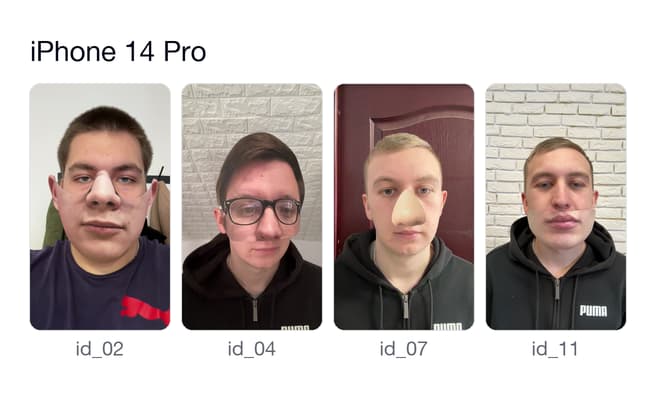
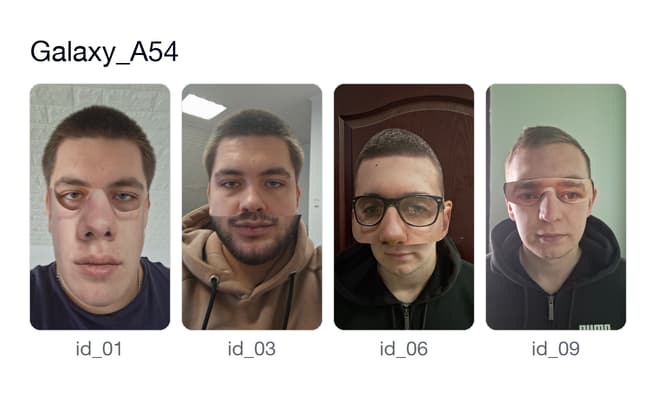
iOS and Android phones (dual-device capture)
Conditions
Indoor, varied lighting

Introduction

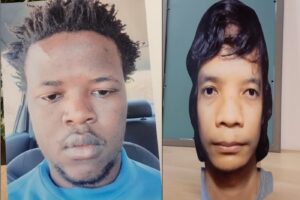
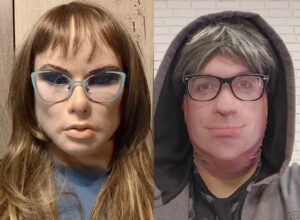
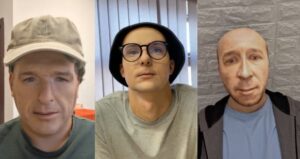
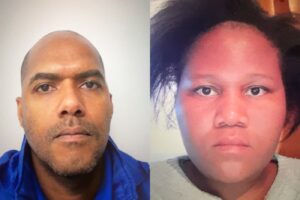
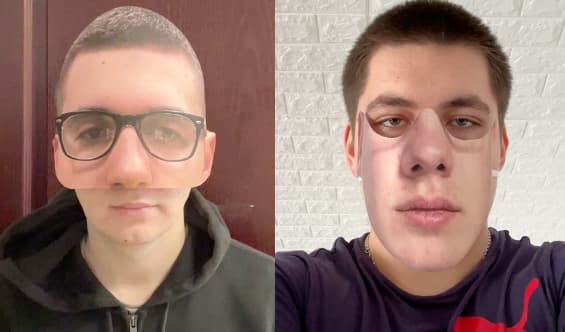
The Partial Paper Mask Attack Dataset is a collection of 3,000 videos featuring partial paper mask attacks – printed fragments of another person’s facial features overlaid on the attacker’s real face. Unlike full-face cutout print attacks where the entire photo is used, these attacks target specific facial regions: eyes, mouth, nose area, and their combinations, while the rest of the attacker’s real face remains exposed. This makes partial paper mask attacks significantly harder to detect: real skin texture, natural blinking, and live facial movement co-exist with the printed fragment, challenging both texture-based and motion-based anti-spoofing systems

Dataset Features

  • Fragment types: Multiple printed facial fragment configurations including eye region, nose region, mouth region, and combined upper- or lower-face overlays
  • Per-participant structure: Approximately 60 videos per participant on average, distributed across fragment types, devices, and capture conditions, providing the within-identity variation needed to train models that generalize beyond surface texture cues
  • Capture protocol: Every video follows a standardized active-liveness sequence – zoom-in, zoom-out, head turn left and right, and natural blinking, mirroring the challenges issued by production liveness systems during real verification flows
  • Skin-tone matching: Paper fragments are printed on color-calibrated stock and matched to each participant’s natural skin tone prior to each session. This removes the obvious tone-mismatch artifacts that simple color-based and texture-based detectors rely on, forcing models to learn deeper liveness signals
  • Lighting conditions: Captures span three lighting categories – low-light indoor, bright indoor, mixed indoor-window, to expose models to the full range of real-world deployment conditions
  • Video duration: ∼10 seconds per clip at native device frame rate

How It Differs From Cutout Print Attacks

Cutout Print Attack
Partial Paper Mask Attack
What is used
Full-face photo cutout
Printed fragment of a specific facial region
Real face visible
No, photo covers entire face
Yes, attacker's real skin, hair, and features are exposed
Liveness features
None, fully static print
Real blinking, movement, skin texture alongside the fragment
Detection difficulty
Standard for PAD systems
Harder, mix of real and fake signals

Real-World Validation: Open Liveness Model Stress Test

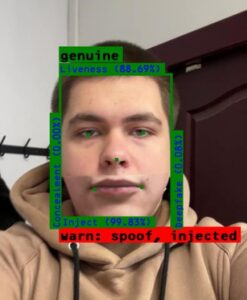
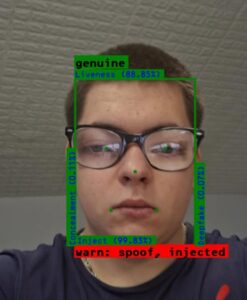
To demonstrate the practical value of this dataset, we tested its samples against Doubango’s open-source face liveness model – a publicly available liveness detection SDK used as a reference implementation by anti-spoofing researchers and developers.

Key result: Doubango’s liveness classifier rated the partial paper mask attack below as 88.69% genuine – failing to detect the spoof at the liveness layer. The attack was only flagged by Doubango’s secondary injection-detection module, not by liveness scoring itself

Use cases and applications

  • Face Anti-Spoofing & PAD: Train presentation attack detection models to identify partial paper overlay attacks – a blind spot for systems trained only on full-face prints, replay attacks, or 3D masks

  • Liveness Detection: Improve liveness detection robustness by exposing models to attacks where real facial movement co-exists with printed fragments, challenging motion-based and texture-based detectors simultaneously

  • iBeta Certification Preparation: Test your liveness system against realistic 2D partial attacks before submitting to iBeta Level 1 or Level 2 certification 

iBeta Success Stories

Datasets like this contributed to 21% of companies that passed iBeta certification in 2025 – all Axon Labs clients

Source and collection methodology

All videos were recorded in-house by the Axon Labs team following a controlled recording protocol. Facial fragments are printed on high-quality color paper, skin-tone matched, and proportionally sized to the participant’s face. Videos include active liveness features: zoom-in/out, natural head movements, and blinking. Recordings were captured across diverse backgrounds and lighting conditions

Need More Data?

This dataset is a ready-made sample. We offer custom data collection for paper mask attacks tailored to your requirements, including larger participant pools, additional devices, specific demographic distributions, and custom mask configurations

Download information

A sample version of this dataset is available on Kaggle. Leave a request for additional samples in the form below

Have a question?

All data is collected in-house by the Axon Labs team. All information is verified by our specialists

Once your enquiry has been sent, we will contact you to discuss the details and complete the necessary paperwork. The timing of receiving the dataset depends on the specific request and additional requirements

Our unique selling point is to provide legally clean datasets to our customers. We obtain the consent from all the participants to use their data for AI model development. We are able to provide comprehensive reporting on the licensing, data collection and privacy compliance of our datasets

The price depends on your specific requirements. Please submit a request to receive a free consultation

The Cutout Print Attack dataset uses full-face photo cutouts — the entire printed face replaces the attacker's face. This dataset uses partial facial fragments: only specific regions (eyes, mouth, nose) are printed and overlaid, while the attacker's real face remains visible around the fragment. This creates a fundamentally different challenge for detection systems

Contact us

Tell us about yourself, and get access to free samples of the dataset 

Didn't find what you were looking for?

Our collection includes many datasets for various requests

© 2022 – 2026 Copyright protected