What is iBeta certification?
iBeta certification requirements
August, 2025
by Axon Labs
What iBeta PAD Certification Means
ISO 30107-3 defines how to evaluate liveness detection systems against presentation attacks at the sensor (camera) during acquisition. iBeta operationalizes that standard into progressive certifications:
- iBeta Level 1 certification: resistance to common, readily available 2D presentation attack instruments (PAIs) in cooperative conditions
- iBeta Level 2 certification: resistance to more sophisticated or varied PAIs and less predictable capture conditions
- iBeta Level 3 certification: resistance to targeted, high-sophistication attacks with custom, hyper-realistic artifacts and curated test environments that give testers more time to engineer optimal attempts; initially available for face PAD under ISO/IEC 30107-3
iBeta PAD Certification Requirements
|
Level
|
Typical attacker sophistication
|
PAI cost limit
|
Time limit
|
Test volume
|
APCER limit
|
BPCER limit
|
|---|---|---|---|---|---|---|
|
1
|
Simple attacks: printed photo, image on a screen
|
≤ 30 USD
|
8 h per PAI
|
6 types × 150 attacks + 50 bona-fide (≈ 900 attempts)
|
0%
|
≤ 15%
|
|
2
|
Medium complexity: dynamic video, 3D prints, latex/silicone masks
|
≤ 300 USD
|
≤ 24 h per PAI; total 2–4 days per type
|
5 types × 150 = 750 attacks + 250 bona-fide
|
≤ 1%
|
≤ 15%
|
|
3
|
Targeted high-end attacks: custom hyper-realistic masks, controlled scene (lighting, background, motion)
|
No fixed limit; budget agreed per system
|
Time and conditions set individually
|
Parameters defined ad hoc; PASS/FAIL evaluation
|
≈ 0% (strict PASS/FAIL)
|
≤ 10%
|
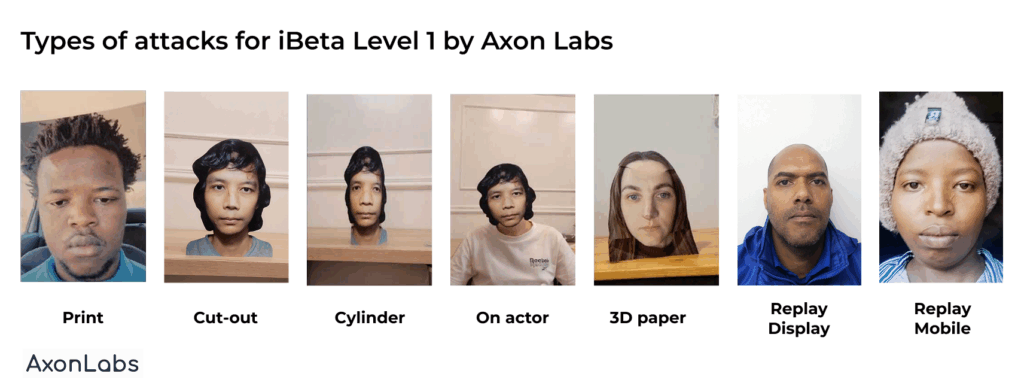
What Are the Types of Attacks in iBeta Level 1 Certification?
|
Attack Name
|
Comment
|
Source
|
|---|---|---|
|
Printed photograph
|
Typical in Level 1 PAD tests; ID R&D explicitly mentions "photo printouts.
|
iBeta whitepaper, ID R&D news
|
|
Video replay (short videos on smartphone/laptop screen)
|
Level 1 examples include "short videos displayed on a smartphone or laptop screen"
|
iBeta whitepaper, ID R&D news
|
|
Paper mask
|
Classified as a "typical PAD Level 1 attack species"
|
iBeta whitepaper
|
|
Cutout mask (with cutouts)
|
PAI description includes "a cutout or a mask" in their Level 1 testing
|
ID R&D news
|
References: iBeta whitepaper, ID R&D news
Examples of attacks from real iBeta success cases - Level 1
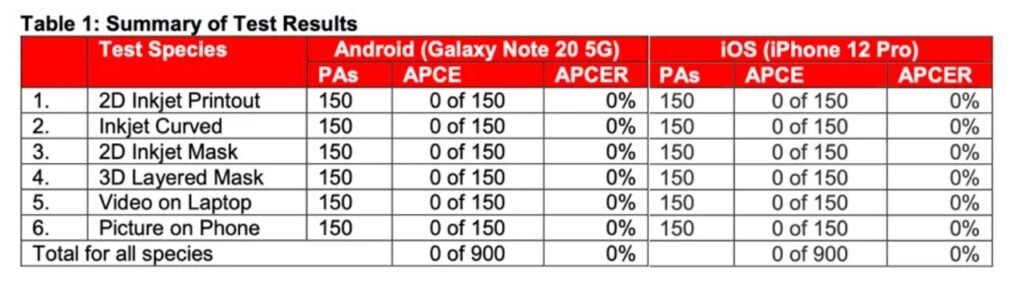
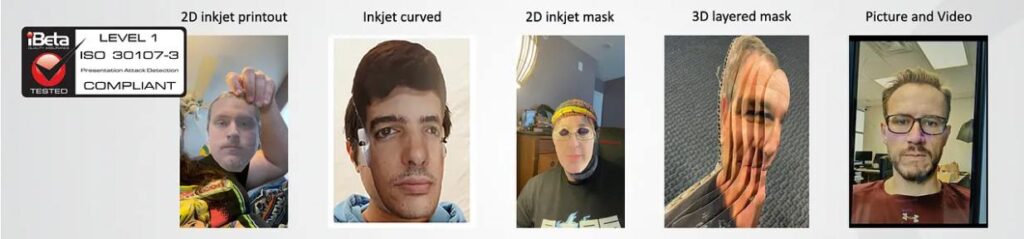
In 2021, KBTG Labs achieved iBeta Level 1 certification under the ISO/IEC 30107-3 standard. The evaluation involved six types of Presentation Attack Instruments (PAI), with the results presented in the table below
KBTG Labs – 2021 – source
Dataset for iBeta Level 1 by Axon Labs
We have compiled a complete dataset for passing iBeta Level 1. Our clients have already used it to successfully pass certification with comprehensive attack scenarios and validation data.
What Are the Types of Attacks in iBeta Level 2 Certification?
Level 2 Attack Types
|
Attack Name
|
Comment
|
Source
|
|---|---|---|
|
Silicone mask
|
Listed in “typical PAD Level 2” attacks; Veridas notes “3D masks made of … silicone”
|
iBeta whitepaper, Biometric Update – Veridas
|
|
Latex mask
|
Explicitly listed as Level 2 example
|
iBeta whitepaper, Biometric Update – Veridas
|
|
Resin mask
|
Also named in typical Level 2 attack list
|
iBeta whitepaper, Biometric Update – Veridas
|
|
3D animation / 3D animation software
|
Typical in L2 PAD; 1Kosmos lists “3D animation software” among attack tools
|
iBeta whitepaper, 1Kosmos press release
|
|
3D-printed mask
|
Listed as one of the attack tools used in L2 evaluation
|
1Kosmos press release
|
|
Realistic dolls
|
Listed for Level 2 as an example of “more sophisticated methods”
|
Biometric Update – Veridas
|
References: iBeta whitepaper, Biometric Update – Veridas, 1Kosmos press release
Examples of attacks from real iBeta success cases - Level 2
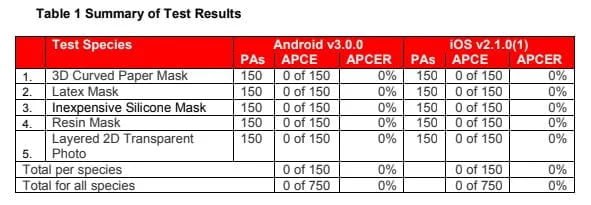
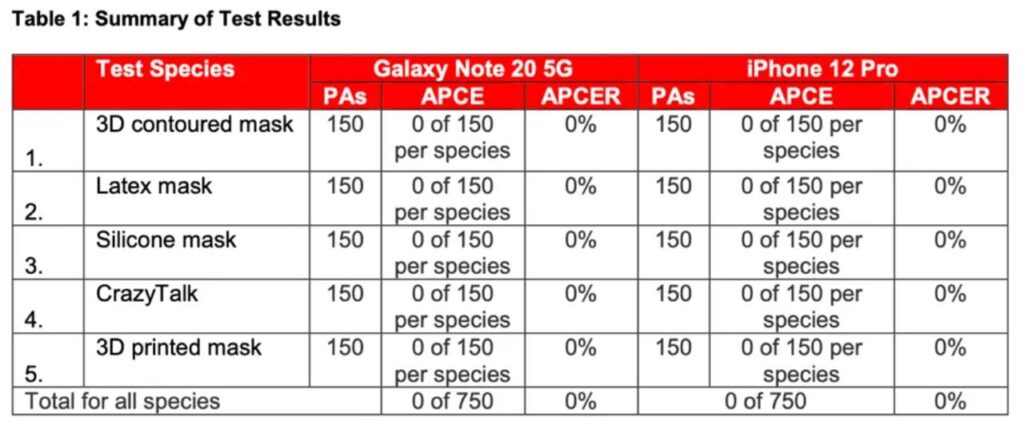
In 2020, Innovatrics successfully passed testing under the ISO/IEC 30107-3 (Level 2) standard at the iBeta Quality Assurance laboratory. The evaluation included five types of attacks (Presentation Attack Instruments, PAI) with advanced materials and techniques.
Innovatrics – 2020
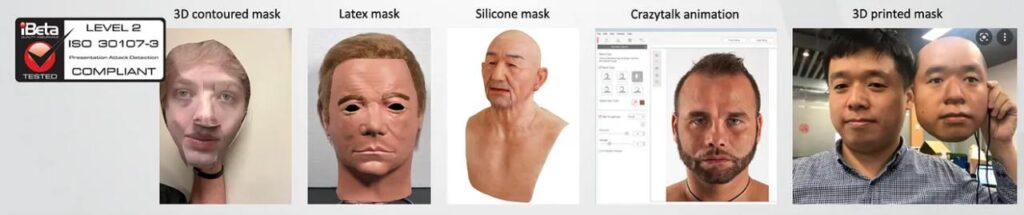
In 2021, KBTG Labs also earned iBeta Level 2 certification under the ISO/IEC 30107-3 standard. The evaluation covered five types of Presentation Attack Instruments (PAI) including silicone masks, 3D prints, and sophisticated video attacks.
KBTG Labs – 2021
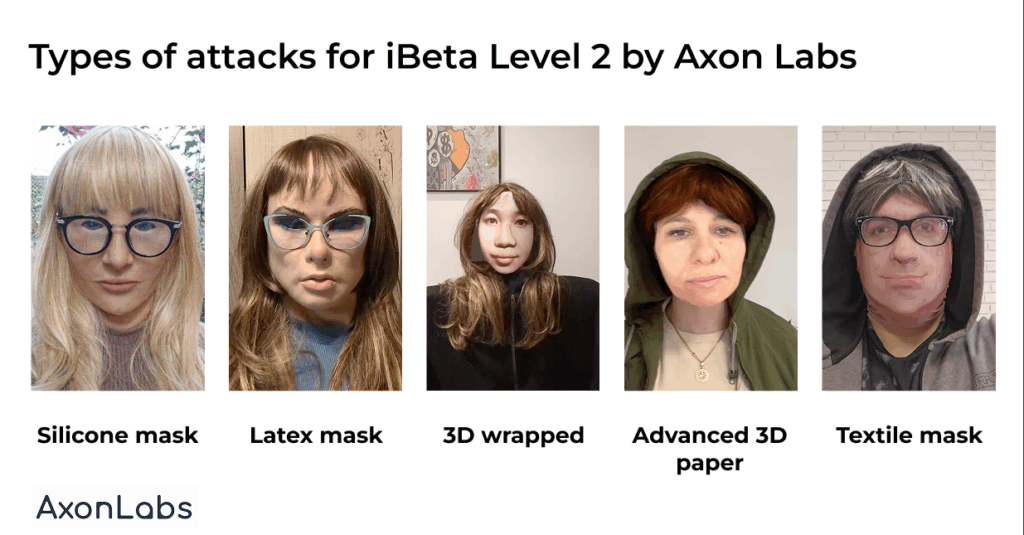
Dataset for iBeta Level 2 by Axon Labs
For iBeta Level 2, we also have a comprehensive dataset. Based on our experience, there are enough attack scenarios in it to successfully pass certification with sophisticated PAI testing requirements.
Ensure GDPR-Compliant Face Dataset
To ensure GDPR-compliant face dataset practices across R&D and certification:
- Explicit purpose & consent: use signed, revocable consent tailored to training/validation, separate from production KYC consent
- Data Protection Impact Assessment: document risks, mitigations, and residual risk acceptance
- Retention policy: define and enforce time-bound retention; auto-purge when the purpose ends or consent is withdrawn
- Cross-border transfers: if applicable, use approved transfer mechanisms and vendor DPAs
- Subject diversity and fairness: monitor performance by demographics to minimize disparate impact
Frequently asked questions
iBeta certification is an independent biometric testing program that certifies Presentation Attack Detection (PAD) systems against ISO/IEC 30107-3, the international standard for biometric anti-spoofing. Testing is performed by iBeta Quality Assurance, an independent laboratory accredited by NVLAP (NIST). iBeta certification is required by major biometric buyers: banks, fintech companies, governments, and FIDO Alliance vendors, to verify that a liveness detection system can resist real-world spoofing attacks before it is deployed in production
The iBeta certification list covers three levels of Presentation Attack Detection testing under ISO/IEC 30107-3: Level 1 tests 2D attacks such as photo prints, cutouts, and display replays; Level 2 tests 3D mask attacks including silicone, latex, wrapped 3D paper, and cloth 3D masks; Level 3 tests the highest-fidelity custom-manufactured 3D masks (rubber and resin). Each level has stricter APCER, BPCER, and ACER thresholds than the previous
iBeta Level 2 certification tests biometric liveness systems against 3D presentation attacks - the attack class most commonly encountered in real-world fraud. Under ISO/IEC 30107-3 Level 2, systems must correctly identify spoofs including silicone masks, latex masks, wrapped 3D paper masks, and cloth 3D masks. APCER (Attack Presentation Classification Error Rate), BPCER (Bona Fide Presentation Classification Error Rate), and ACER thresholds are stricter than at Level 1. iBeta Level 2 is the most commonly pursued certification for fintech, KYC providers, and banking onboarding applications
iBeta certification typically takes 4–12 weeks end-to-end, depending on the certification level and how prepared your liveness model is before submission. The testing phase alone usually takes 2–6 weeks. Most delay comes from pre-submission preparation, gathering diverse training data, improving model accuracy, and iterating on failed attack types. Companies that prepare with comprehensive training datasets upfront tend to pass on first attempt; those that don't often need 2–3 submission cycles, significantly extending timeline and cost
iBeta certification fees typically range from $10,000 to $50,000+ per submission, depending on the certification level and attack types tested. Level 1 is the most affordable; Level 3 is the most expensive. However, the submission fee is often the smaller cost: failed attempts, re-submissions, and extended engineering time to improve model performance frequently exceed certification fees by 3–5x. Investing in comprehensive training data before submission is typically the highest-ROI decision in the certification process
To prepare for iBeta certification, your liveness model needs training data covering all attack types tested at your target level. For iBeta Level 1 - photo prints, cutouts, and display replays. For iBeta Level 2 - silicone, latex, wrapped 3D paper, and cloth 3D mask attacks. For iBeta Level 3 - high-fidelity rubber and 3D resin masks. 21% of companies that passed iBeta certification in 2025 are Axon Labs clients, who prepared their models using comprehensive attack-type coverage before submission
iBeta maintains a public list of certified vendors across all PAD certification levels. The list includes identity verification providers, fintech companies, KYC platforms, and biometric authentication vendors. Here are the reports on iBeta certification in 2024 and 2025
Success iBeta stories of our clients